A team, not a single nutrient
No single vitamin runs your immune system. Vitamins A, C, D, B6, B12 and folate, and the minerals zinc, selenium, iron and copper, all contribute to the normal function of the immune system. A varied diet supplies most of them.
Vitamin C: needed every day
The NHS points out that vitamin C cannot be stored in the body, so you need it in your diet every day. Adults need 40mg a day — easy to reach with oranges, peppers, strawberries, broccoli or potatoes. Taking more than 1,000mg a day from supplements can cause stomach pain and diarrhoea.
Vitamin C also contributes to the protection of cells from oxidative stress.
Zinc: small amounts, big role
The NHS puts zinc needs at about 9.5mg a day for men and 7mg a day for women. Good sources are meat, shellfish, dairy foods such as cheese, bread and cereal products. More is not better: high doses of zinc reduce the amount of copper the body can absorb.
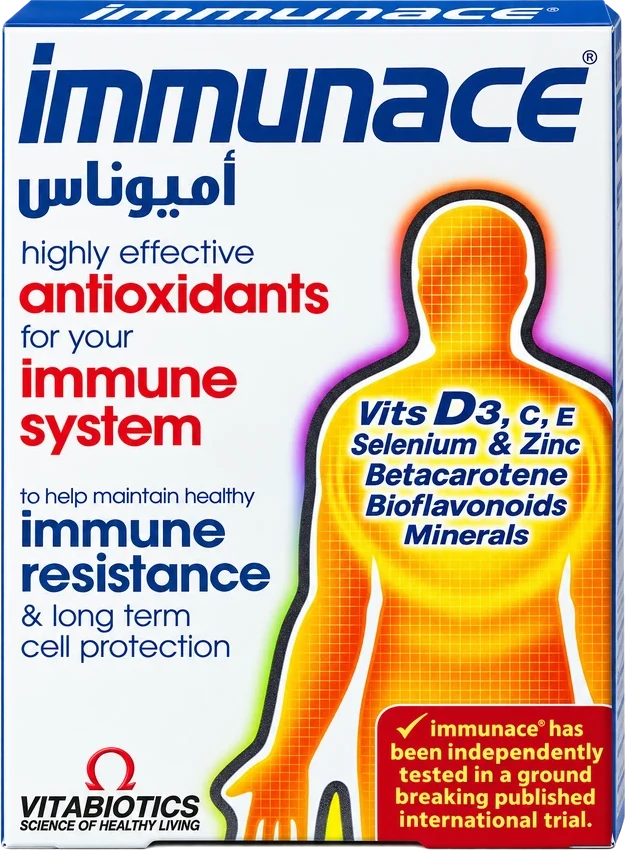
A balanced formula such as Immunace combines vitamins D, C and E with zinc and selenium at sensible levels, which is simpler and safer than stacking single high-dose products.
Habits that count
- Sleep well and regularly.
- Stay physically active.
- Wash your hands often, especially before eating.
- Do not smoke.
- Eat fruit and vegetables every day.
When to see a doctor
Supplements are not a treatment for infections. See a doctor if a fever is high or lasts more than a few days, if you have difficulty breathing, or if you seem to catch one infection after another.
This information is for general education and does not replace advice from your doctor or pharmacist.
Sources
We cite public health authorities only.