Why joints change
Joints are cushioned by cartilage and held together by connective tissue. Over the years they carry a lot of load. The NHS describes osteoarthritis as the most common type of arthritis in the UK; it is more common in women, and excess weight adds strain to the joints that carry it, such as the knees and hips.
Movement is the foundation
It sounds backwards, but moving is one of the best things for stiff joints. The NHS recommends at least 150 minutes of moderate activity a week, such as brisk walking or cycling, plus strength exercises on 2 or more days.
- Choose low-impact options: walking, swimming, cycling.
- Strengthen the muscles around the joint — they share the load.
- Keep to a healthy weight to reduce strain on knees and hips.
Nutrients for cartilage and bone
Vitamin C contributes to normal collagen formation for the normal function of bones and cartilage. Copper contributes to the maintenance of normal connective tissues, and vitamin D, zinc and manganese contribute to the maintenance of normal bones.
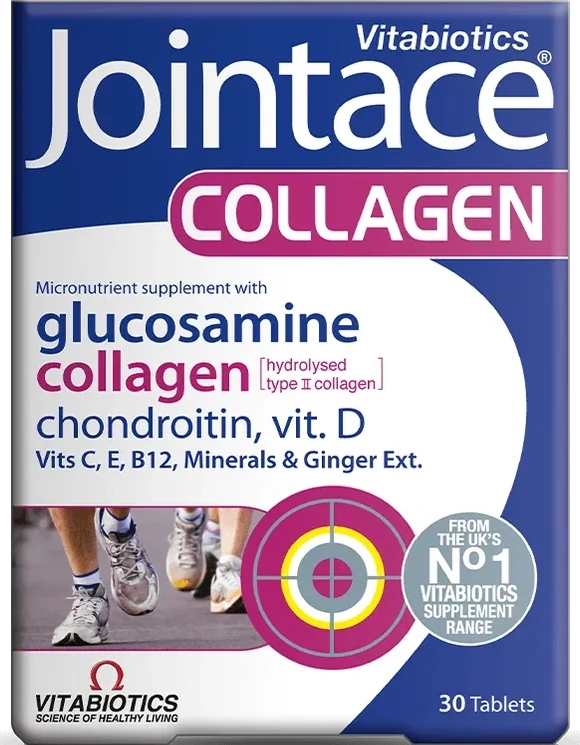
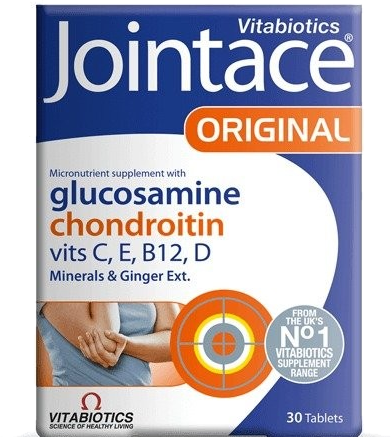
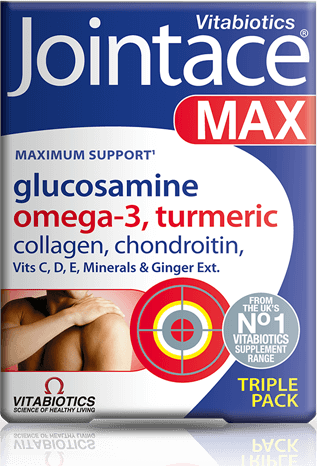
The Jointace range combines these nutrients in different formats — tablets, a collagen formula and a stronger Max option — so you can choose what suits your routine. Ingredients such as glucosamine have no authorised health claim, so we describe only what the vitamins and minerals do.
When to see a doctor
The NHS advises against self-diagnosing joint pain. Get medical advice promptly if:
- The skin around a painful joint is swollen and feels hot.
- You have joint pain and feel generally unwell, feverish or shivery.
- The pain has lasted for weeks or stops you doing everyday things.
This information is for general education and does not replace advice from your doctor or pharmacist.
Sources
We cite public health authorities only.