Nutrients for normal vision
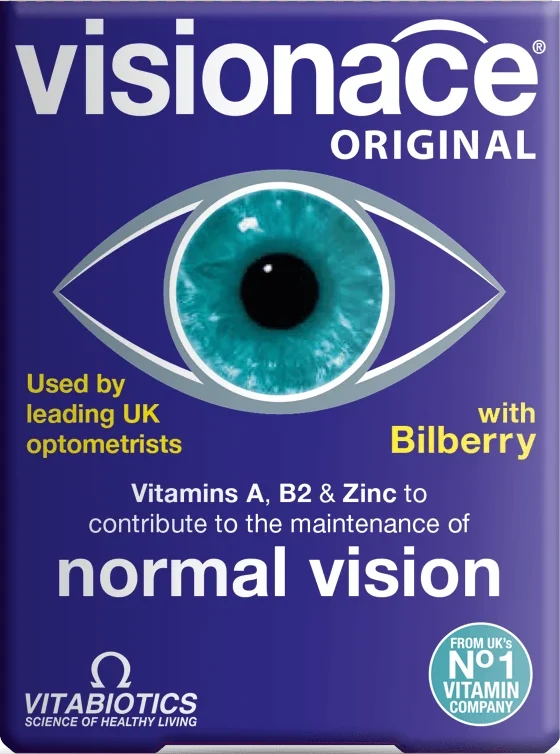
Vitamin A, riboflavin (vitamin B2) and zinc contribute to the maintenance of normal vision. Vitamins C and E contribute to the protection of cells from oxidative stress. Visionace brings these together in one daily formula.
Colour on your plate
Dark green leafy vegetables, orange and yellow vegetables such as carrots and sweet potatoes, eggs, oily fish and nuts all feed the eyes. Yellow and orange vegetables provide beta-carotene, which the body can turn into vitamin A.
Daily habits
- Wear sunglasses that block UV light in strong sun.
- Take regular breaks from screens and look into the distance.
- Do not smoke — the NHS lists smoking as a risk factor for age-related macular degeneration.
- Have your eyes tested regularly, and follow your doctor’s schedule for eye checks if you have diabetes.
Warning signs
The NHS describes a blurred or distorted patch in the centre of your vision, straight lines that look wavy, and new sensitivity to bright light as symptoms of macular degeneration. Any sudden change in vision, eye pain or a red, painful eye needs an eye doctor promptly — nutrition cannot fix these.
This information is for general education and does not replace advice from your doctor or pharmacist.
Sources
We cite public health authorities only.