Blood sugar in brief
Glucose from food is the body’s main fuel. Insulin, a hormone, moves it from the blood into the cells. The NHS explains that in type 2 diabetes the body does not make enough insulin, or the insulin does not work properly, so glucose builds up in the blood.
Where chromium fits
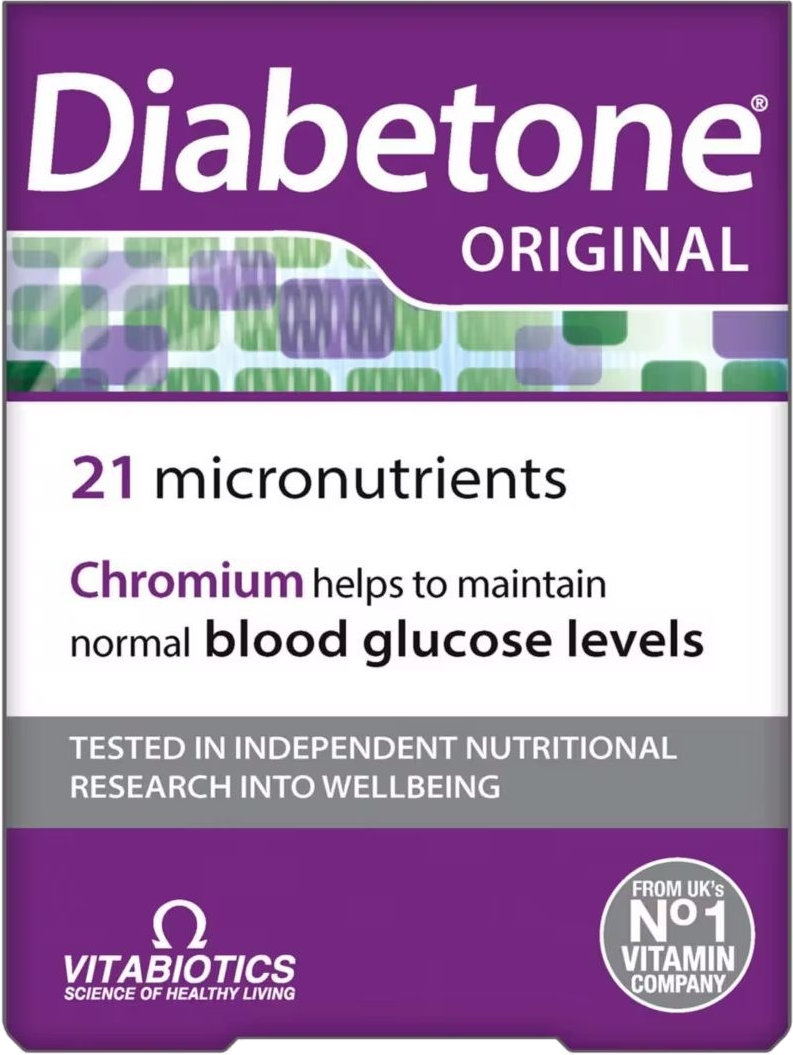
Chromium is a trace mineral. It contributes to the maintenance of normal blood glucose levels and to normal macronutrient metabolism. It is found in foods such as broccoli, whole grains and meat. Diabetone combines chromium with B vitamins: vitamin B1 contributes to the normal functioning of the nervous system, and vitamin B6 contributes to normal protein and glycogen metabolism.
Habits come first
The WHO says a healthy diet, regular physical activity, a healthy body weight and avoiding tobacco are ways to prevent or delay type 2 diabetes. In practice that means fewer sugary drinks and sweets, more vegetables and whole grains, and at least 30 minutes of moderate activity every day, as the WHO advises.
Signs worth a blood test
The NHS notes that not everyone with type 2 diabetes has symptoms, which is why testing matters. See a doctor if you notice:
- Peeing more than usual, especially at night.
- Feeling very thirsty or very tired.
- Losing weight without trying.
If you already have diabetes
A supplement is never a replacement for diabetes medicine, and you should not change your treatment on your own. Tell your doctor about any supplement before you start it, keep monitoring your sugar as advised, and keep up your regular eye and foot checks.
This information is for general education and does not replace advice from your doctor or pharmacist.
Sources
We cite public health authorities only.